Stop Scrolling: Creating a Sale Post That Actually Converts
You know the feeling. You’re mindlessly scrolling through Instagram, dodging ads for socks that claim to change your life and influencers selling questionable detox teas, when suddenly—bam—a design catches your eye. It isn’t just the offer; it’s the presentation. It looks professional, cohesive, and urgent. As a business owner or designer, you want that reaction from your audience. You want them to stop the scroll, engage with your content, and actually click "Shop Now." The challenge is that creating high-quality, conversion-focused graphics from scratch every single time is exhausting. This is where having a solid set of design assets becomes less of a luxury and more of a necessity for survival in the crowded digital marketplace.
The Anatomy of a High-Converting Visual
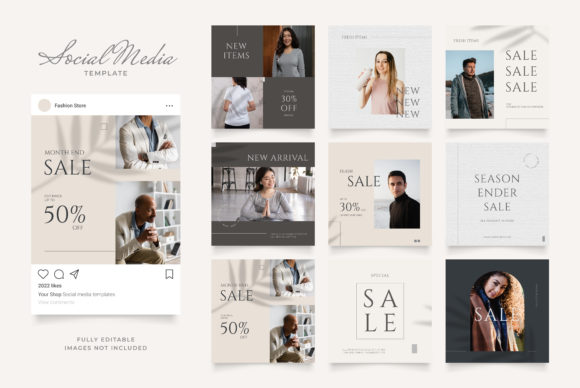
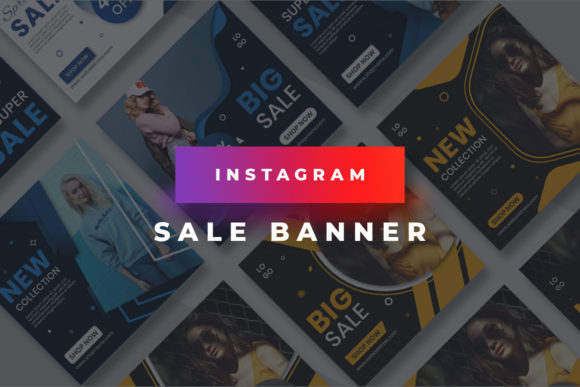
When we talk about an Instagram Post Sale Banner, we aren't just talking about a picture with a price tag slapped on it. We are talking about a carefully balanced ecosystem of typography, imagery, and negative space. The reason many small business owners struggle with their promotions is that they treat the sale post as an afterthought. They spend hours perfecting their product photography, only to throw it into a generic Canva template with clashing colors. A truly effective banner guides the viewer’s eye. It establishes a hierarchy of information: the hook (the discount), the product (the visual), and the action (the call to action). If any of these elements are out of balance, you lose the customer.
Consider the technical side for a moment. Instagram compresses images, which can ruin a beautiful design if the source file isn't crisp. Starting with a high-resolution foundation—specifically a 1080x1080 pixel canvas at 300 dpi—ensures that your text remains sharp and your images vibrant, even after the platform processes them. This attention to detail signals professionalism to your audience. It tells them that if you care this much about the quality of your graphic, you probably care just as much about the quality of your product or service.
Flexibility is the Ultimate Asset
One of the biggest headaches in design is rigidity. You find a template that looks great, but you can't change the font to match your brand guidelines, or the color palette is locked to a neon green that clashes with your earth-tone aesthetic. This is why "fully editable" isn't just a buzzword; it's the feature that saves your sanity. Imagine having a toolkit where every single element is accessible. You need to swap out the background color? Done in seconds. You want to change the headline font to a bold sans serif and the subtext to an elegant script? Easy.
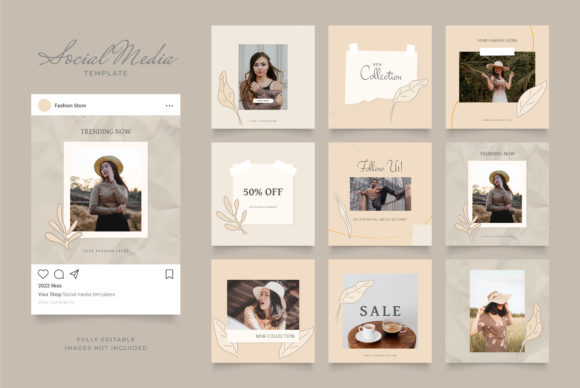
This level of customization is vital for maintaining visual consistency. Your Instagram grid is your digital storefront. If your sale posts look disjointed from your regular content, it creates a jarring experience for the user. By utilizing templates that leverage Smart Objects, you can seamlessly integrate your own product photography. You simply paste your image into the designated layer, and the template handles the perspective, masking, and lighting effects automatically. This allows you to maintain a professional brand identity without spending hours on complex Photoshop techniques.
Beyond the Feed: Practical Applications
While the primary use case might be an Instagram Post Sale Banner, the utility of a well-designed social media kit extends far beyond a single square graphic. Good design assets are modular. The elements that make up a great sale post—the typography, the badge shapes, the layout structures—can be repurposed to strengthen your presence across multiple touchpoints.
Think about your other marketing assets. Do you have an email newsletter? Using the same visual language from your Instagram sale posts in your email headers creates a cohesive experience for the subscriber. If they saw the sale on social media and opened your email, the visual recognition helps reinforce the message. Furthermore, these design elements can be adapted for:
- Story Highlights: Resize and reformat the templates to create cohesive cover icons for your Instagram stories.
- Pinterest Pins: While the templates are square, the layered elements allow you to easily rearrange them into a vertical format for Pinterest, driving traffic to your site.
- Digital Product Mockups: If you are selling digital goods, use the templates to create promotional graphics that showcase your offer in a lifestyle context.
- Website Banners: Extract the key graphic elements to create a homepage hero banner announcing your current promotion.
The goal is to create a seamless ecosystem. When your packaging design, social media, and website all share the same DNA, you build trust. You look established. You look like a brand, not just a hobbyist.
Typography as a Sales Tool
Let’s talk about the text. In the world of social media graphics, typography does the heavy lifting. It’s not just about readability; it’s about psychology. A bold, all-caps sans serif font screams urgency and importance—perfect for a "Flash Sale" or "50% Off" headline. Conversely, a flowing script font might suggest exclusivity or luxury, ideal for a "VIP Access" or "Private Sale" event.
The challenge for many entrepreneurs is finding the right premium font that balances style with legibility. Too often, people choose a decorative font that looks beautiful but becomes unreadable at small sizes on a mobile screen. A high-quality template set solves this by pairing fonts for you. It combines a display font for the headers with a clean sans serif font for the details, ensuring your message gets across instantly.
When selecting your typography strategy, consider the "squint test." If you squint at your design and the main message is still identifiable, you’re on the right track. If it turns into a blurry mess, your font choice is working against you. The templates you choose should offer a variety of typographic styles—perhaps a mix of modern typography and handwritten fonts—so you can select the voice that best fits the specific campaign you are running.
Speed and Efficiency in a Fast-Paced Market
In e-commerce and content creation, speed is currency. Trends on Instagram move fast. If you spend three days designing a single promotion, you’ve already missed the window of peak engagement. The beauty of a structured, layered template system is the speed of execution. Because the files are well-organized and labeled, you aren't hunting through layers trying to figure out which one controls the shadow effect.
This efficiency allows you to focus on strategy rather than execution. Instead of worrying about pixel alignment, you can focus on your offer. Is 20% off enough? Should I bundle these products? Should I run this for 24 hours or a week? By removing the friction of design production, you empower yourself to be a better marketer. You can A/B test different offers by quickly swapping out text and images, analyzing which visual style resonates most with your audience.
Final Thoughts on Elevating Your Brand
Ultimately, the tools you use reflect the value you place on your business. Using professional, high-resolution, and fully editable design assets isn't about "faking" success; it's about removing barriers so your actual product can shine. Whether you are a photographer running a holiday mini-session sale, a fashion boutique clearing out inventory, or a digital creator launching a new course, the visual presentation is the first handshake with your customer.
Don't let a sloppy graphic undermine a great offer. Invest in a system that gives you control, consistency, and creative freedom. When your visuals are aligned with your brand’s voice, you stop shouting into the void and start having a conversation with your customers. That is how you turn a simple post into a powerful sales engine.